


Rates Guide
Great Migration
FAQs
Rates Guide
How Much Does an African Safari Cost?
Planning a luxury African safari? Here’s a helpful price guide to give you an idea of what a one-week safari (6 nights/7 days) might cost in some of the most sought-after destinations like Tanzania, Kenya, South Africa, and Botswana. These sample prices are per person and include accommodation, internal flights, and transfers. Actual safari prices vary depending on your travel dates, level of luxury, and itinerary preferences, but this guide is a great starting point.
African Safari Costs (Per Person for 6 Nights / 7 Days)
Prices vary by season and level of luxury
| Destination | Value (Low Season) | Value (High Season) | Classic (Low Season) | Classic (High Season) | Luxury (Low Season) | Luxury (High Season) |
|---|---|---|---|---|---|---|
| Tanzania | $5,000-$7,000 | $7,000-$10,000 | $7,000-$8,000 | $10,000-$14,000 | $10,000+ | $14,000+ |
| Kenya | $5,000-$7,000 | $9,000-$10,000 | $7,000-$8,000 | $11,000-$13000 | $10,000+ | $13,000+ |
| South Africa | $5,000-$7,000 | $6,000-$7,000 | $7,000-$10,000 | $8,000-$13,000 | $9,000+ | $13,000+ |
| Botswana | $7,000-$8,000 | $8,000-$10,000 | $7,000-$10,000 | $10,000-$15,000 | $10,000+ | $15,000+ |
Note: This price guide is for reference only. Actual costs will vary depending on factors such as travel dates, accommodation choices, availability, and itinerary specifics. We provide personalized quotes to give you an accurate cost tailored to your unique journey.
Safari Options Tailored to Your Style
- Luxury SafarisExperience the pinnacle of comfort with stays at exclusive lodges and camps offering private pools, impeccable service, and exquisite amenities. Prices often start at $2,500+ per person per night, with full trips reaching $15,000 or more.
- Classic SafarisEnjoy stays at premium 5-star camps with expert guides and gourmet dining. These safaris provide an ideal balance of luxury and authentic wildlife adventure, generally priced from $9,000 to $12,000 per person for a week.
- Value SafarisIdeal for adventurers seeking genuine wilderness experiences, Value safaris offer comfortable tented camps or lodges with expert guiding. Prices usually start at around $5,000 per person for a week, providing excellent value without compromising quality.
What’s Included in Your Safari Price
Safari packages include domestic flights, transfers between locations, park entry fees, and accommodation. Daily meals, soft drinks, and local alcoholic beverages are covered as well. Special activities like hot air balloon rides or private tours are extra and can be added when customizing your trip.
What’s Not Included in Your African Safari
- International Flights: Usually booked separately; we can assist if needed.
- Visa Fees: Vary by country; often $30–$100 per person.
- Vaccinations: Required for many destinations; consult your doctor.
- Tipping: Guidelines provided; not included in prices.
- Travel Insurance: Mandatory; must be arranged before travel.
What Influences Safari Costs?
Key factors that influence your safari price include:
- Group Size: Single rooms cost extra.
- Transport: Private transfers, flights, or road travel affect price.
- Activities: Special experiences add extra fees.
- Season: Traveling off-peak can save up to 40%.
- Accommodation: From comfortable camps to luxury lodges.
- Trip Length: 3–4 nights per location is ideal.
- Destination: Remote parks often cost more due to travel.
- Fees: Daily park and government fees apply per person.
Why Choose Africa?
African safaris are a premium travel experience, and while costs may be higher than other destinations, they are truly worth every moment and dollar. Africa offers unparalleled wildlife encounters, stunning landscapes, and rich cultural experiences that create lifelong memories. Many travelers fall in love with Africa on their first visit and find themselves eager to return again and again. It’s a journey that belongs on every traveler’s bucket list — an investment in extraordinary moments you’ll cherish forever.
Great Migration
The Great Wildebeest Migration: When, Where, and How to See It
The Great Migration is one of the most incredible wildlife events on the planet. Every year, more than 1.5 million wildebeest, along with hundreds of thousands of zebras and gazelles, travel in a giant circle between Tanzania’s Serengeti and Kenya’s Masai Mara in search of fresh grass and water. Along the way, they face dramatic river crossings, predators on the hunt, and mating and calving seasons — making it an unforgettable spectacle of survival and instinct.
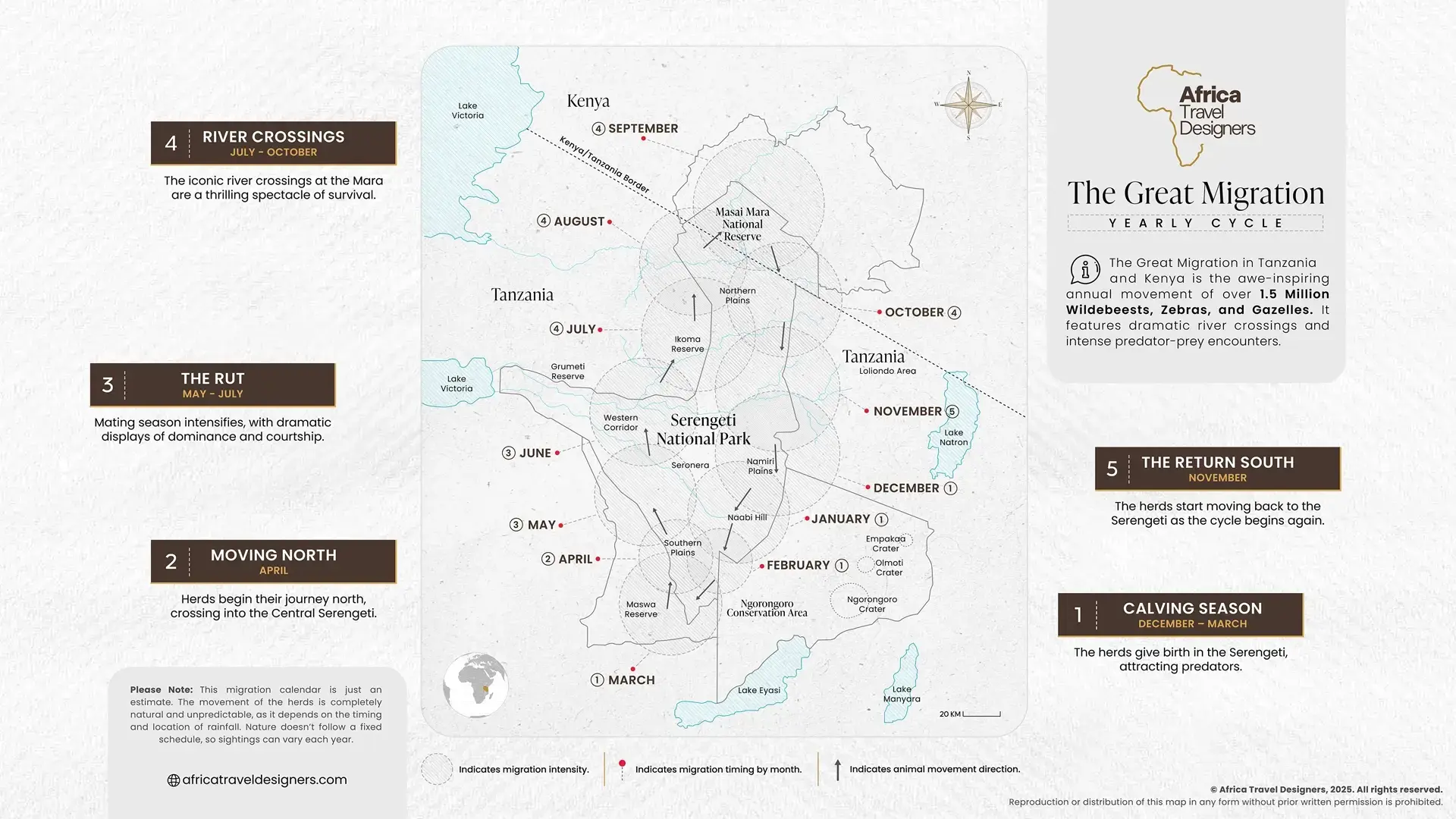
- Click to enlarge
Here’s how the Great Migration unfolds throughout the year:
Month-by-Month Migration Guide
Month-by-Month Migration Guide
- January – March:Herds gather in Southern Serengeti for the calving season. Thousands of wildebeest calves are born each day, attracting predators like lions and cheetahs.
- April – May:As the southern plains dry out, the herds begin moving northwest through the Central Serengeti, heading toward the Western Corridor.
- May – June:Wildebeest reach the Grumeti River in the Western Serengeti. This marks the start of the first dramatic river crossings, often involving crocodile-filled waters. The rutting season (mating) also begins here.
- July – August:The herds make their way north toward the Mara River, crossing into Kenya’s Maasai Mara. This is when you’ll see the most iconic river crossings, often captured in documentaries.
- September – October:The herds continue grazing in the Maasai Mara. Small groups move between Tanzania and Kenya depending on rainfall.
- November – December:The herds begin heading south again as the short rains fall, making their way back to the Southern Serengeti to complete the cycle.
Important to Know
The Great Migration is not a fixed schedule. While the general pattern stays the same each year, the timing and location can change based on rainfall, grazing conditions, and weather. Nature doesn’t follow a calendar — so all migration sightings are estimated, not guaranteed. Our team uses on-the-ground updates and expert local partners to plan your trip at the best possible time, with the best chances to witness the action.
Why Book Your Migration Safari With Us?
- We plan your trip around your travel dates, budget, and preferences
- We track migration patterns to estimate the best time and place to see the herds
- You avoid missing the migration by arriving too early or too late
- We handle all logistics: flights, transfers, permits, and park access
Want to witness the Great Migration in person?
Let us help you plan the perfect journey at the perfect time.
FAQs
1. When is the best time to see the Great Migration?
The Great Migration is a year-round journey across Tanzania and Kenya. For the iconic river crossings, the best time is mid-July to October in the Northern Serengeti and Masai Mara.
For more info, check Great Migration tab.
2. Can you guarantee we’ll see the herds or a river crossing?
The migration follows nature, so exact sightings can’t be guaranteed. But we use decades of experience and real-time updates to place you in the right location at the right time—maximizing your chances.
3. Is the migration better in Kenya or Tanzania?
Tanzania’s Serengeti offers year-round migration experiences, including calving (Jan–Mar) and river crossings (Jul–Oct).
Kenya’s Masai Mara sees the herds from mid-July to October, during their stay in the northern part of the migration route.
We’ll recommend the best destination based on your travel dates.
4. How far in advance should I book a migration safari?
For peak months (June–October), we recommend booking 6 to 12 months in advance to secure the best lodges and camps.
5. What does “Per Person Sharing” mean?
It means the price is per person based on sharing a room or tent with someone. If you're traveling alone, you may pay a single supplement for your own room.
6. Can I do a private safari?
Yes. Many of our clients opt for fully private safaris, which may include:
- Private guides and vehicles
- Exclusive-use villas or mobile camps
- Tailored flight routes and timing
7. What kind of accommodation will I stay in?
We work with luxury lodges and safari camps chosen for their comfort, service, and proximity to key wildlife areas. Whether you want remote wilderness or refined bush luxury, we’ll match you with the right option.
8. What is a typical day on safari like?
Most days start with an early morning game drive, followed by time to relax at camp. Afternoon drives begin after tea and end with sundowners in the bush.
Each day is tailored to your pace and preferences.
9. Is a safari suitable for families or older travelers?
Yes. We craft safaris for all ages and group types, including families and multi-generational travelers, with accommodations and pacing to suit everyone.
10. How physically demanding is a safari?
Safaris are generally low-impact. You’ll spend most of your time in comfortable vehicles, with optional short walks. Everything can be adjusted to your comfort level.
11. What should I pack?
- Light, neutral-colored clothing
- Sunscreen, sunglasses, and a wide-brim hat
- Warm layers for early mornings and evenings
- Comfortable walking shoes
12. Is it cheaper to book directly with lodges?
Not necessarily. Through our trusted partnerships, we often offer better value, added perks, or exclusive offers that aren’t available through direct booking.
We also handle the logistics—from flights to lodge combinations—so your safari is smooth from start to finish.
13. What’s included in my safari?
Your trip typically includes:
- Luxury accommodations
- Internal flights and transfers
- Daily game drives
- Park fees and permits
- 24/7 on-the-ground support
14. How do internal flights and transfers work?
We arrange it all. You’ll take scenic bush flights that land near your lodges, with private transfers waiting to take you between destinations.
15. Do I need a visa or vaccinations?
It depends on your nationality and travel route. We’ll advise you based on your itinerary. Common requirements include yellow fever vaccination and malaria precautions.
16. Is travel insurance required?
Yes, travel insurance is mandatory for all our safaris.
For more info, view our Travel Insurance Guide.
17. How do payments and bookings work?
Once your itinerary is confirmed, a deposit is required to secure your space. The balance is typically due 60 days before travel. For full terms, see our Terms & Conditions.
18. Can I combine the migration with other destinations?
Absolutely. Many guests combine the migration with:
- Gorilla trekking in Rwanda or Uganda
- A beach stay in Zanzibar, Seychelles, or Mozambique
We’ll tailor your journey into a seamless, multi-country experience.
19. Is tipping expected on safari?
Tipping is appreciated but not mandatory. Here’s a general guide:
- Safari Guides: $15–$20 per guest, per day
- Transfers/Drivers: $40 per group, per day
- Lodge/Camp Staff: $10–$15 per guest, per day
- Restaurants: ~10% of the bill
20. Will I have internet or cell service on safari?
Most luxury lodges offer Wi-Fi in guest areas, so you can stay connected if needed. However, coverage may be limited during game drives or in remote regions, where cell service can be spotty or unavailable. A partial digital detox is part of the experience — but you’ll still be reachable when necessary.
21. What’s the difference between a fly-in safari and a drive-in safari?
A fly-in safari involves taking small bush planes between parks or lodges. It's faster, offers scenic aerial views, and gives access to remote, exclusive camps. This option is perfect if you want to maximize time on safari and minimize long drives.
A drive-in safari means traveling between locations by road, usually in a private 4x4 safari vehicle with your guide. It's more cost-effective and lets you see the changing landscapes, but may involve long hours on the road, especially in East Africa.
22. What’s the difference between Full Board and Game Package?
The key difference is who operates the safari activities.
- A Game Package means your game drives are provided by the lodge itself, using their own professional guides and safari vehicles. These are often open-sided 4x4s, especially in private conservancies. This setup is ideal for fly-in safaris, where you travel between remote lodges by bush plane and join shared game drives on arrival.
- Full Board means the lodge provides accommodation and meals only, and your safari is operated by an external safari company. You’ll travel with your own private guide and vehicle (usually with a pop-up roof), which is ideal if you’re visiting multiple parks by road and want the same guide throughout your journey.
23. Safari luggage limits and packing advice
Safaris usually involve small planes and vehicles with limited space. It’s best to pack light and use soft-sided bags instead of hard suitcases.
Most bush flights allow between 15 to 20 kg (33 to 44 lbs) of luggage per person, including hand luggage. You can usually add extra weight for an additional fee, depending on the airline.
We’re happy to help you with luggage allowances and any extra weight arrangements to make your trip smooth.